

VisionCapacity and care.
Public Sphere Projects is a national planning practice. We build transformative, actionable plans that strengthen the strategic capacity, economic competitiveness, and cultural character of shared places.

Public Sphere Projects was honored to contribute our expertise as part of an Urban Land Institute Advisory Services Panel focused on St. Louis’ historic Gateway Mall. Together with a panel of urban planning and real estate experts from around the world, we held in-depth interviews with nearly 100 local stakeholders, deliberated on potential courses of action, and presented our preliminary findings to the public. (Image by Chip Crawford / LJC Design + Engineering / Urban Land Institute)
Since the 1980s, hardworking urban place managers, city officials, and community leaders have constituted a far-flung field. In ways large and small, they have sought to make their neighborhoods more safe, clean, and commercially vibrant. Today, this work is undergoing an exceptional, once-in-a-generation change. Increasingly, it contends with questions not just of safety but of belonging. It attends not only to the aesthetics of city environments but to ethics. It values not merely economic development but economic justice.
The ground that we work on has also shifted. Downtown storefronts that, a generation ago, were depopulated now face commercial gentrification.
Infrastructures once designed to move cars out of cities are now recruited into service as gathering places for people. Neighborhoods subjected to strategic disinvestment for decades are now shaken by displacement. And institutions that have traditionally held — and hoarded — power are now challenged to share it with communities.
To us at Public Sphere Projects, these seemingly disparate, turbulent flows do not merely intersect. They form a powerful confluence — strong enough to make our shared places more just and joyous, deep enough to make them better resourced and loved.
How we flex
Our strategic insight helps communities build consensus, envision the future, and unlock value in shared places. We support our clients across the following practice areas:
Policy and systems change
District formation
Policy analysis and research
Economic development
Communications and case-making
Engagement and public process
Facilitation and peer learning
Strategic planning and capacity building
Strategic planning and district planning
Public space planning
Cultural planning
Finance and value-capture
Governance and organizational capacity
Place management and activation
District operations and stewardship
Creative placemaking and place-keeping
Activation and programming
Public art curation and installation
Pilots and pop-ups
A contest of ideas
Places are a physical representation of ever-changing, competing values and ideas. At Public Sphere Projects, we take seriously our responsibility to contribute an informed perspective to the conversation — to define and defend our ideas. We share thought leadership by presenting at professional conferences and speaking with the media. And we throw ourselves passionately into the fray every chance we get.
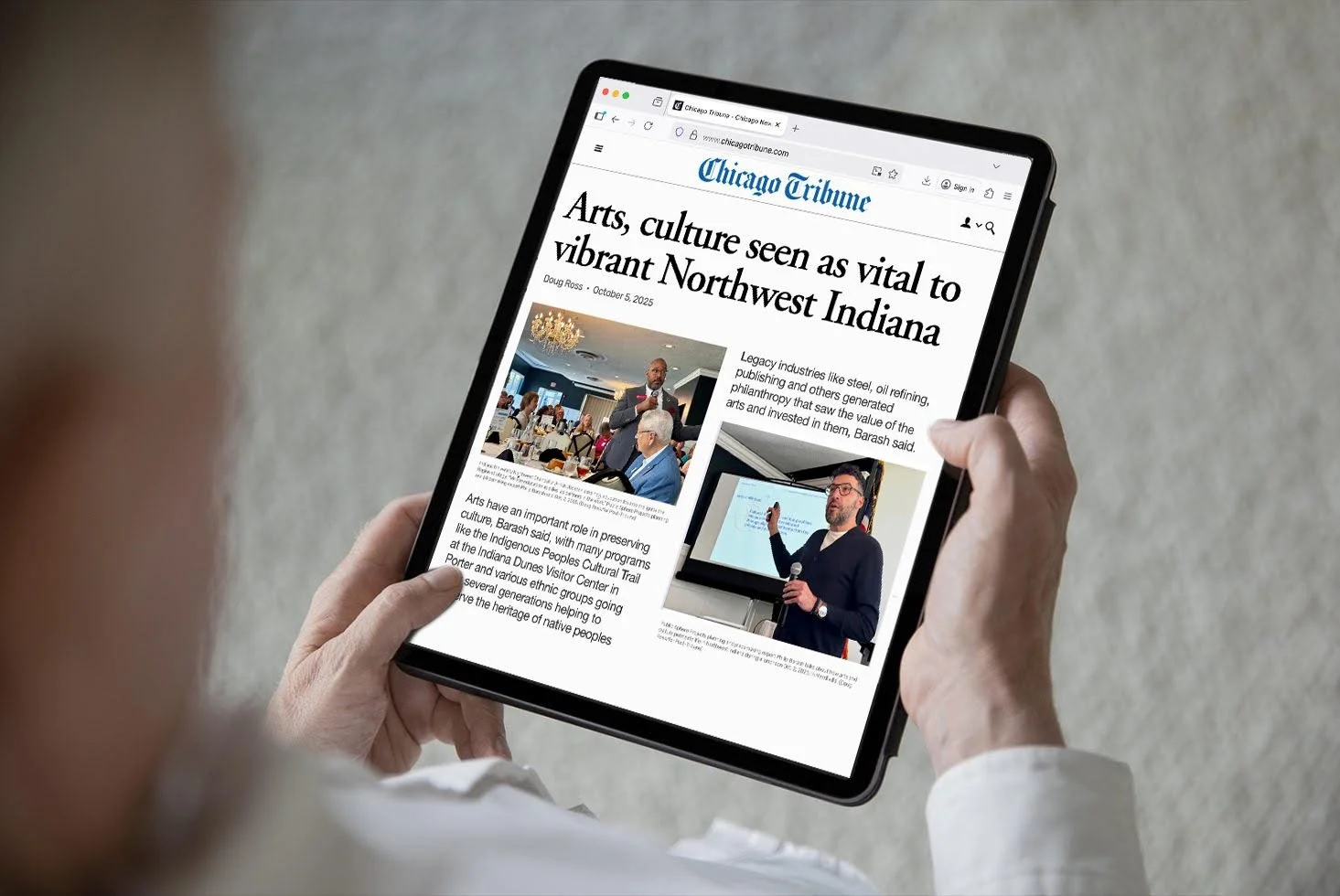
Northwest Indiana’s identity is inextricable from its natural beauty and industrial brawn. The Chicago Tribune highlights how, thanks to our cultural plan, the region has learned to embrace art as central to its character.

Named by the Eames Institute of Infinite Curiosity, the annual “Curious 100” list features some of the most prominent designers, planners, and change-makers. We are tickled that our Philip Barash snuck into this cabinet of curiosities.
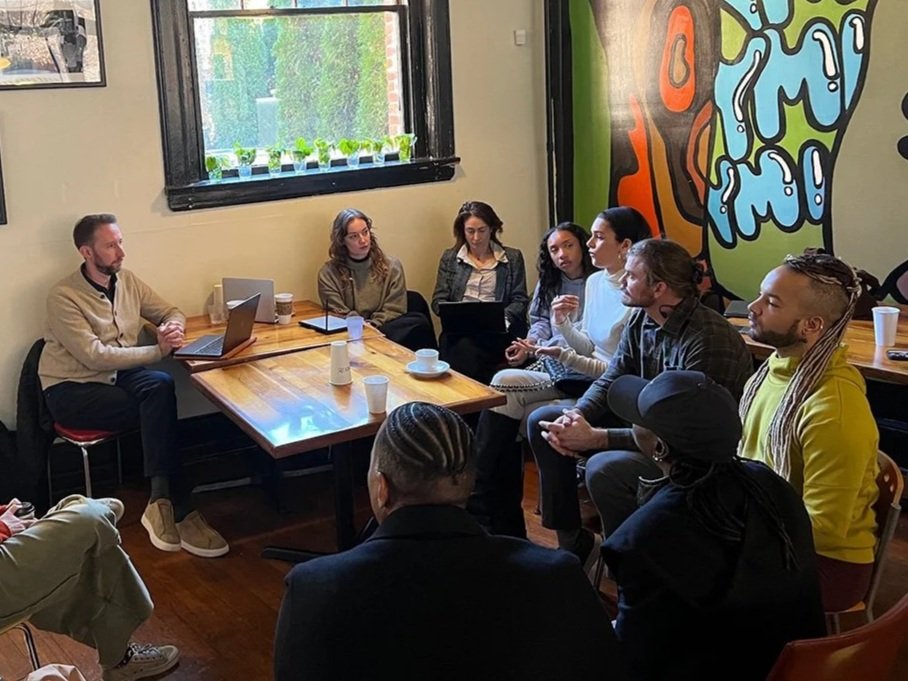
Downtown Asheville is forging its post-disaster fortunes. Our dialogue with community leaders — conducted as part of a resilience plan — is featured in the Asheville Downtown Improvement District’s 2025 Annual Report.

The public realm cuts across municipal agencies and jurisdictional boundaries. But who is in charge? We speak to The New York Times about a “public realm czar.”

Federal infrastructure investments are remaking a generation of cities. At an American Planning Association roundtable discussion, we make a case for prioritizing “cultural infrastructure.”

Since its beginnings in the 1980s, the place management field has professionalized and evolved. Now, the paradigm is shifting once more. We write about an emerging ethos of place management.

Parks and open spaces create economic value for downtowns. Yet they are often underfunded. We convene an expert panel at the International Downtown Conference to puzzle out this paradox.

Architects are often expected to act as social workers and organizers. But when designers do community engagement, are we letting public agencies off the hook? We opine in Architect Magazine.

Downtown Boston struggled to fill retail vacancies post-pandemic. We share lessons about how, with a bit of stimulus funding and tons of creativity, the commercial district returned to life.
